
The Job That Changed Everything: What it’s Really Like to Fly Private
Apr 25, 2026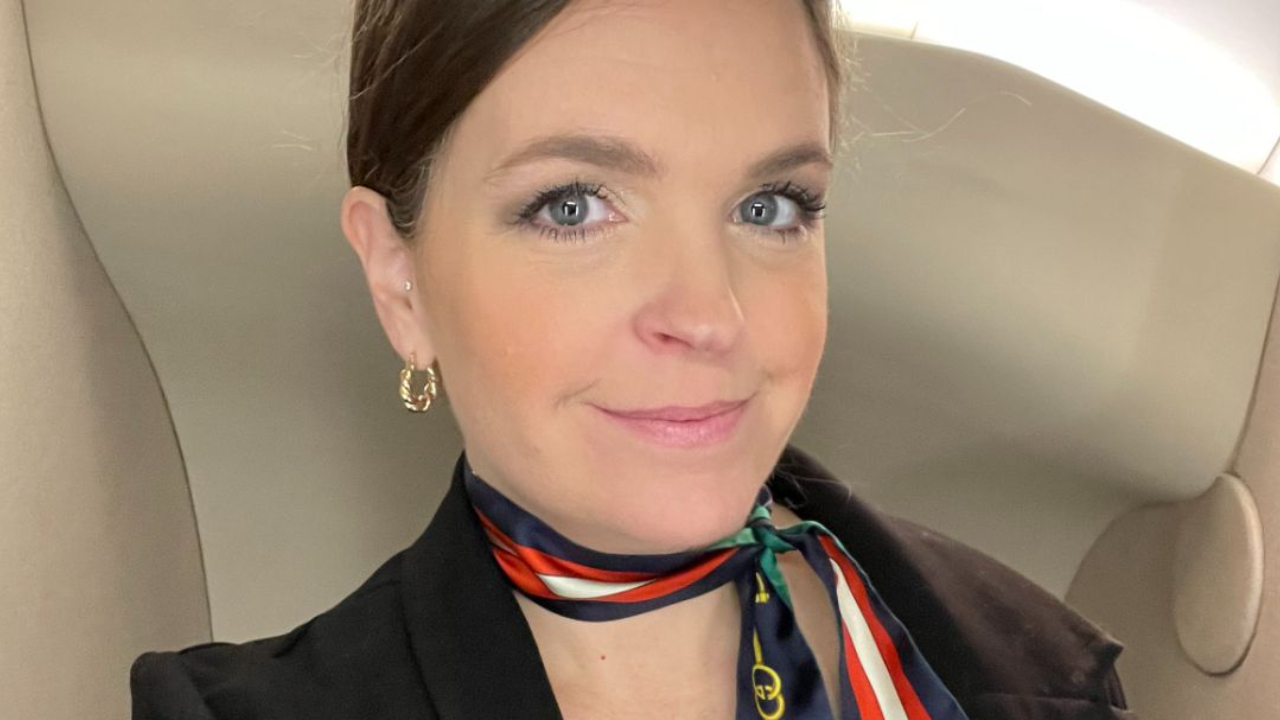
Let me paint you a picture.
It’s 6 a.m. You’re standing on a private tarmac somewhere in the South of France. The jet behind you costs more than most people’s neighborhoods. You’ve just served a perfectly chilled Cristal to a guest who casually mentioned they were heading to Monaco “for the weekend.” Your uniform is impeccable. Your composure? Flawless.
This is Tuesday.
Welcome to the world of the corporate flight attendant, one of the most exclusive, highest-paid, and least-talked-about careers in aviation. I’m Jacqueline, and I’ve spent years inside this industry, coaching aspiring cabin crew and helping place talented professionals into private aviation roles that most people don’t even know exist. Today, I’m pulling back the curtain.
This Isn’t Your Typical Flight Attendant Job
When most people think “flight attendant,” they picture boarding announcements, beverage carts, and 200 passengers asking for extra pretzels. Corporate aviation is a different universe entirely.
As a corporate flight attendant, you’re typically working on a private jet: think Gulfstream, Bombardier, Dassault Falcon — with anywhere from one to nineteen passengers. These passengers are CEOs, heads of state, celebrities, and ultra-high-net-worth families. The service standard isn’t modeled after first class. It’s modeled after a five-star hotel, a Michelin-starred restaurant, and a personal concierge service all at 45,000 feet.
Your job is to anticipate needs before they’re spoken. To know that the principal prefers his espresso at a specific temperature. That his wife is gluten-free but will accept almond flour pastries if they’re freshly prepared. That the guest in seat three should never be offered the same wine twice in one flight.
That level of detail? That’s the art of this career.
The Pay (Let’s Talk About It)
Here’s the insider truth nobody posts on job boards: experienced corporate flight attendants can earn between **$120,000 and $150,000+ per year**, and some on-demand freelance crew earn **$900–$1,200 per day** on trip calls.
Many positions include benefits like hotel accommodations at luxury properties, per diem on top of daily rates, and the kind of travel experiences that most people save their whole lives to have. I’ve had students placed in roles where they’ve flown to the Maldives, Aspen, Capri, and Tokyo all in the same month.
But let me be clear: it’s not just about the paycheck. It’s about the lifestyle. The freedom. The caliber of work. And yes it’s about knowing that you earned your seat in one of the most competitive, selective industries in the world.
What Most People Get Wrong
The biggest mistake I see when people try to break into corporate aviation? They approach it like a commercial airline application.
It is not.
Operators and flight departments hiring private cabin crew are looking for a very specific profile: someone polished but not stiff, service-obsessed but discreet, resourceful under pressure, and capable of sourcing a specific vintage of Burgundy at a Luxembourg FBO at 11 p.m. on a Saturday. (Yes. This happens.)
The candidates who land these roles aren’t just former commercial flight attendants. They’re former luxury hotel managers, fine dining professionals, yacht stewardesses, and personal assistants who made the pivot at the right time with the right guidance.
That’s where coaching makes all the difference.
Over the years, I’ve worked with hundreds of aspiring corporate flight attendants helping them craft the right resume, build their training portfolio, nail the interview process, and ultimately step onto a private jet with confidence. The placements I’ve been a part of span everything from charter operators and fractional programs to full-time positions with private family offices and Fortune 500 flight departments.
The industry is smaller than you think. Reputation travels fast. How you enter matters enormously.
So, Is This Career for You?
If you’re reading this and something in you is saying *yes* — lean into that feeling. But go in with eyes wide open.
This career rewards those who are:
– **Discreet** — What happens on the jet stays on the jet. Always.
– **Adaptable** — Your schedule will change. Sometimes hourly.
– **Excellence-driven** — Good enough is never good enough at this level.
– **Emotionally intelligent** — Reading a cabin full of high-powered personalities is a skill, and it takes time to master.
If that sounds like you, the door is open. And I genuinely love helping the right people walk through it.
Ready to Take the First Step?
It’s the guide I wish someone had handed me when I was starting out. And it’s completely free.
I’ve put together a **free First Flight Guide for aspiring corporate flight attendants** — a curated resource that walks you through the essentials: what training you actually need, how to position yourself in the market, what operators are really looking for, and how to land your first trip.
**Grab your copy and start your journey into private aviation.**
Because somewhere out there, a jet is waiting — and the right crew member is still deciding whether to take the leap.
Take the leap.