
How To Become A Corporate Flight Attendant
Apr 27, 2026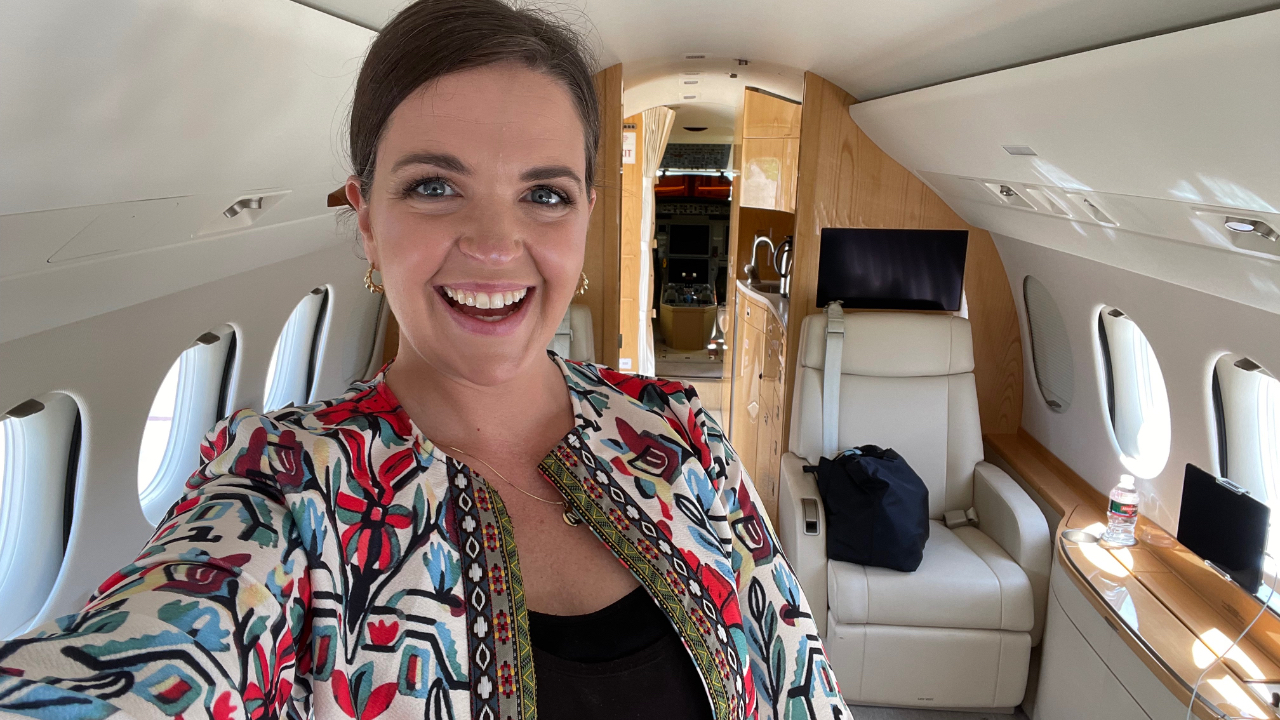
How to Become a Corporate Flight Attendant: The Complete Guide to Breaking Into Private Aviation
*By Jacqueline Travels*
If you’ve ever wondered how to become a corporate flight attendant, you’re not alone. Every week, I hear from aspiring aviation professionals who are done with the commercial grind or who have never set foot in a galley at all and want to know how to break into one of the most lucrative, glamorous, and misunderstood careers in the sky.
The short answer: it’s absolutely possible. But it requires the right roadmap.
I’m Jacqueline, a corporate flight attendant industry coach and consultant. I’ve helped hundreds of candidates navigate the path from “I think I want to do this” to “I just landed my first private aviation role.” In this guide, I’m sharing everything you need to know about how to become a corporate flight attendant the training, the skills, the job search strategy, and the mistakes to avoid.
Let’s get into it.
What Is a Corporate Flight Attendant?
Before we talk about how to become a corporate flight attendant, let’s make sure we’re clear on what the job actually is.
A corporate flight attendant also called a private flight attendant or cabin crew works aboard private and business jets rather than commercial airliners. These aircraft are operated by corporations, wealthy individuals, charter companies, fractional jet programs, and government entities.
Unlike commercial flight attendants, corporate flight attendants typically serve very small groups of high-profile passengers: executives, celebrities, heads of state, and ultra-high-net-worth families. The service standard is closer to a luxury yacht or a five-star hotel than it is to a commercial airline cabin.
Corporate flight attendants may work:
- **Full-time** with a flight department or corporate flight operation
- **Part-time or on-demand** through charter and staffing agencies
- **Freelance** on a trip-by-trip basis with multiple operators
Each path has its own lifestyle, earning potential, and entry requirements.
Why People Want to Become Corporate Flight Attendants
There’s a reason searches for “how to become a corporate flight attendant” have been climbing steadily. The appeal is real:
- **Higher earning potential** — Corporate flight attendants can earn $100,000–$150,000+ annually, with freelancers often commanding $900–$1,200 per day
- **Luxury travel** — Think Monaco, the Maldives, Aspen, and Milan — sometimes all in the same month
- **Smaller crews** — You’re not managing 200 passengers. You’re delivering personalized, world-class service to a handful of discerning guests
- **Discretion and prestige** — The private aviation world is exclusive, and those who work within it carry a professional reputation that opens remarkable doors
- **Schedule flexibility** — Many corporate flight attendants work on-demand, giving them control over when and how much they work
If that sounds like your kind of career, keep reading.
Do You Need Commercial Flight Attendant Experience to Become a Corporate Flight Attendant?
This is one of the most common questions I receive and the answer might surprise you.
**No. Commercial flight attendant experience is not required.**
While it can be helpful, many successful corporate flight attendants come from backgrounds in luxury hospitality, fine dining, yachting, personal assisting, or concierge services. What matters far more than your specific industry background is your service mindset, attention to detail, and professional presentation.
That said, there are a few non-negotiables:
- **Safety training** — You must hold current corporate flight attendant safety training, typically from an approved provider such as FlightSafety International, FACTS Training, or similar. This is the baseline credential for any corporate cabin crew role.
- **A polished, industry-specific resume** — Your commercial or hospitality resume will not translate automatically. It needs to be reframed for private aviation.
- **Knowledge of aircraft, service standards, and passenger etiquette** — This is where structured education makes all the difference.
How to Become a Corporate Flight Attendant: Step by Step
Step 1: Get the Right Safety Training
Safety training is the foundation. Without an approved corporate flight attendant safety course, you will not be hireable. Period. This training covers emergency procedures, aircraft-specific protocols, first aid, and regulatory requirements for Part 91 and Part 135 operations.
Plan to recur this training annually — it’s a career-long commitment, not a one-time checkbox.
Step 2: Build Your Service Credentials
If you come from commercial aviation, luxury hotels, fine dining, or superyachts you already have a foundation. If not, consider building skills in areas like:
- Wine and spirits knowledge
- International cuisine and dietary requirements
- High-end table service and presentation
- Discretion and confidentiality protocols
Corporate clients notice. And the flight departments hiring you notice even more.
Step 3: Learn the Industry — From the Inside
This is where most aspiring corporate flight attendants stall out. They complete safety training and then have no idea how to actually enter the market, who’s hiring, what operators want, or how to avoid being passed over.
That’s exactly why I created **The Corporate Flight Attendant Course**.
**The Corporate Flight Attendant Course** is a comprehensive, industry-specific program designed to take you from aspiring to hired. Inside the course, you’ll learn:
- How the private aviation industry is structured (and where you fit in)
- What operators, charter companies, and flight departments are *actually* looking for
- How to build a corporate flight attendant resume that gets noticed
- Interview preparation specific to private aviation
- How to find and apply for corporate flight attendant jobs including the ones that are never posted publicly
- How to negotiate your rate and position yourself as a premium candidate
- The insider etiquette, protocols, and unspoken rules of the bizav cabin
I built this course because when I was starting out, there was no roadmap. I learned through experience, and a lot of trial and error. The Corporate Flight Attendant Course gives you the shortcut I never had, taught by someone who has lived this career and coached professionals into it at every level.
Step 4: Build Your Network Before You Need It
Private aviation is a relationship-driven industry. Jobs are filled by referral more often than by public posting. Start building your network early:
- Connect with corporate flight attendant professionals on LinkedIn
- Join private aviation Facebook groups and online communities
- Attend aviation events and industry conferences like NBAA
- Follow charter operators, fractional programs, and flight departments on social media
The goal is to be known before you’re looking because when an opportunity opens, it often fills in days, not weeks.
Step 5: Register With Staffing Agencies
Corporate flight attendant staffing agencies are one of the primary ways on-demand and freelance crew find work. Registering with reputable agencies is an important early step. They’ll want to see your safety training credentials and a polished resume which brings us back to why preparation matters.
Step 6: Nail the Application and Interview Process
The corporate flight attendant interview process is unlike any other. You may be evaluated on your appearance, your composure, your knowledge of aircraft types, your service philosophy, and your ability to handle hypothetical high-pressure scenarios, all in a single conversation.
In The Corporate Flight Attendant Course, I walk students through exactly what to expect and how to present themselves with confidence, precision, and the kind of polish that makes a hiring decision easy.
How Long Does It Take to Become a Corporate Flight Attendant?
The timeline varies, but here’s a realistic framework:
- **Safety training:** 3–5 days (initial)
- **Course and preparation:** 4–8 weeks
- **Active job search to first placement:** 6 months to over a year depending on market conditions, credentials, and networking
With the right preparation, many of my students land their first trip or position within 90 days of completing their training.
Is Becoming a Corporate Flight Attendant Worth It?
If you have a passion for service excellence, a love of travel, and the drive to operate at the highest level, yes. Absolutely, unequivocally yes.
This is a career that rewards those who take it seriously and approach it strategically. The earning potential is real. The lifestyle is extraordinary. And the professional satisfaction of delivering flawless service at 45,000 feet to the world’s most discerning passengers? There’s nothing quite like it.
Start Your Journey Today
If you’re serious about learning how to become a corporate flight attendant, **The Corporate Flight Attendant Course** is your next step.
This isn’t a generic aviation overview. It’s a focused, practical, insider-led program built specifically for people who want to enter private aviation the right way and actually get hired.
**Enroll in The Corporate Flight Attendant Course today** and take the first real step toward the career — and the life — you’ve been imagining.
The jet is waiting. Let’s get you on it.
-----
*Jacqueline Travels | Corporate Flight Attendant Coach & Industry Consultant*
-----
Frequently Asked Questions: How to Become a Corporate Flight Attendant
**Do I need a college degree to become a corporate flight attendant?**
No degree is required. Operators prioritize service experience, safety training, professional presentation, and soft skills over formal education credentials.
**Can I become a corporate flight attendant with no flight attendant experience?**
Yes. Many successful corporate flight attendants transition from luxury hospitality, yachting, fine dining, or personal assisting. The right training and coaching bridge the gap.
**How much do corporate flight attendants make?**
Salaries range from $80,000 to $150,000+ for full-time positions. Freelance and on-demand corporate flight attendants typically earn $900–$1,200 per day.
**What aircraft do corporate flight attendants work on?**
Common aircraft include Gulfstream G450, G550, G650, Bombardier Global Express, Dassault Falcon 7X and 8X, and Embraer Lineage 1000, among others. Larger jets (typically those with a stand-up cabin) most commonly require a dedicated flight attendant.
**What is the difference between a corporate flight attendant and a commercial flight attendant?**
Corporate flight attendants work in private aviation with small groups of high-profile passengers and a luxury service standard. Commercial flight attendants manage larger cabins in scheduled airline operations. The training requirements, earning potential, schedules, and service expectations differ significantly.